Rebuilding Woodfox on Astro
Third version of the Woodfox site. Coffees are now Markdown files with a status, so the menu can change with the harvest without touching layout.
Website for a young specialty coffee roaster, rebuilt three times as the brand found its voice. Static, fast, and structured so the menu can change with the harvest.
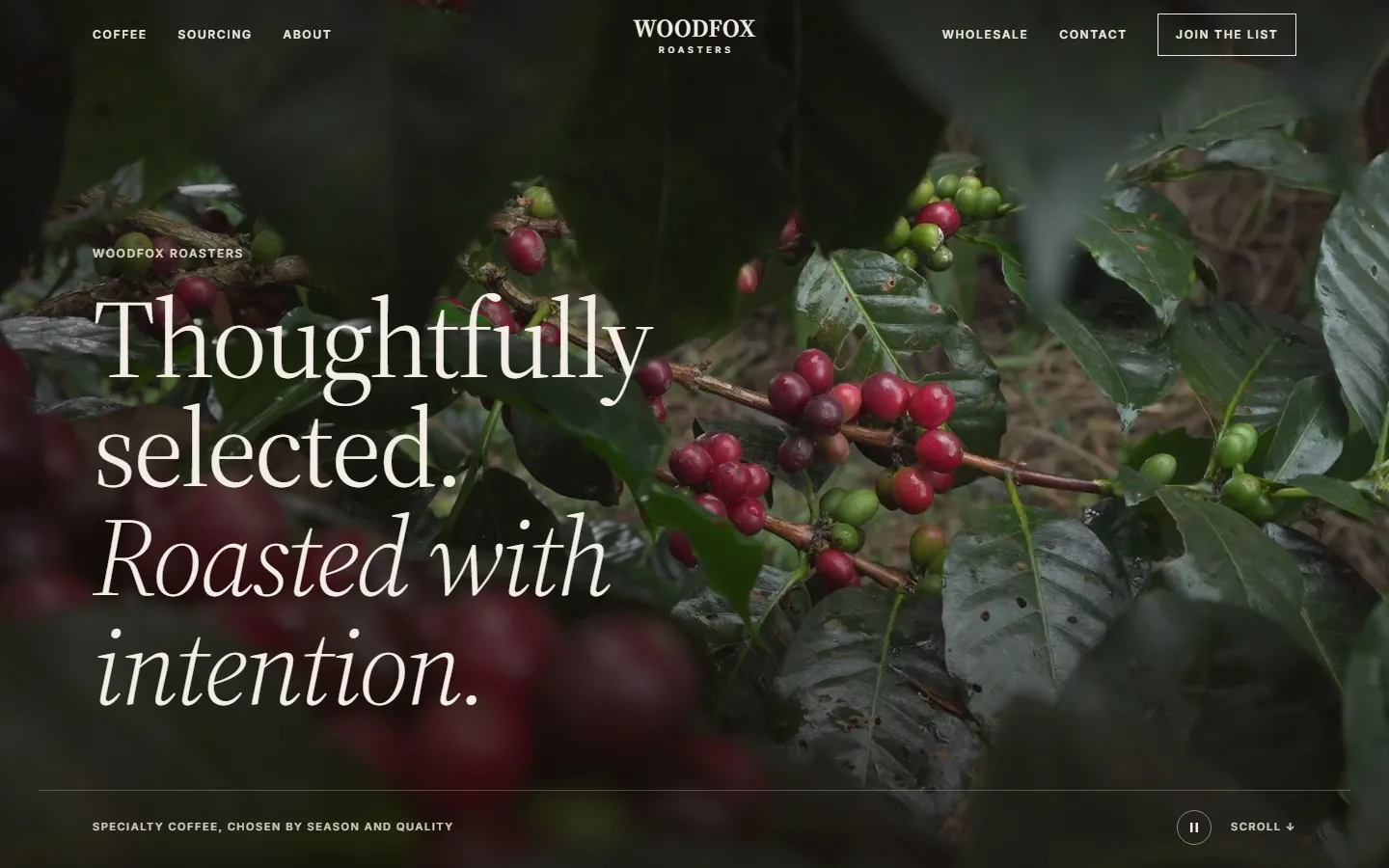
Woodfox Roasters is a young specialty coffee company. The site has to do a few jobs at once: introduce the brand, explain how the coffees are chosen, let people join a list before the first release, and give wholesale buyers a way to get in touch. Later it needs to sell coffee.
It went through three versions in 2026: a quick static first site in March, a redesigned landing page in September, and a full rebuild on Astro in October. Each one was a response to what the previous one got wrong.
The first version looked like a coffee site but didn’t say much. It leaned on product photos and generic coffee language, and it was built as one hand-edited HTML page, so every change to the lineup meant editing markup.
A roaster that buys by season has a menu that keeps changing. The site needed to make that a feature of the brand rather than a maintenance problem.
Treat the site as two things: a brand story that rarely changes, and a small content system for the coffees that changes all the time.
The brand side should be calm, editorial and specific: why these coffees, how they’re chosen, what “seasonal” actually means. The coffee side should be data: one file per coffee, with a status, so adding, releasing or retiring a coffee never touches the layout.
upcoming, available, sold-out). Pages and listings generate from it, and a “coming soon” panel shows automatically until the first coffee is published.Astro builds every page at deploy time. Content lives in Markdown with a typed schema, so a missing field just hides that row instead of breaking the page. Site settings (email, location, form endpoints, navigation) live in one config file.
Checkout isn’t live yet, and that’s deliberate. The site is structured so each coffee can carry a hosted checkout link (Stripe Payment Links or Shopify). When a coffee is available and has a link, its page shows a Buy button. That keeps the site free of a backend, a cart, or stored payment details until the business actually needs them.
The forms work the same way: they validate input today and tell the visitor plainly that nothing was sent, until a form endpoint is connected. No fake success messages.
preserveSymlinks), but finding it meant comparing dev and production output file by file.The best structural decision was separating what changes from what doesn’t. Once the coffees were data, the design could stay quiet and the business could move at the speed of the harvest.
Build log
Third version of the Woodfox site. Coffees are now Markdown files with a status, so the menu can change with the harvest without touching layout.
First version of the Woodfox site. Hand-built HTML and CSS, a hero video, product photos, and a lot of commits moving one logo around.
Build something
An idea, a messy workflow, a site that should work better. If it's a real problem, I'd like to hear about it.